Sunday, October 11, 2009

Real World

Hey everyone,

So I've been kind of dreading to write this post partly because there's so much to report on and partly because I have to put down in writing a lot of unfortunate things that have happened lately.

Well, I realized I forgot to tell you about the Celtic Festival that I attended before I left for Chile. It was literally a few blocks from my house, and there were bagpipe players and vendors selling Celtic-oriented things. I bought some Welsh cakes and chocolate imported from Scotland, and technically I also bought one of the traditional Irish rings, but like with all my other rings, I managed to lose that within the night. So I don't know if I can even count that as a purchase. Anyway, the real treat were the performances. There was everything from "classical" Irish music, dancing and one band even incorporated these elements with rock music. It was a lot of fun and I was really happy that I attended.

So, next thing... well, a group of ISA students traveled to Colonia, Uruguay, which is what you would guess, a colonial but touristy town. We traveled by ferry, which by all means seemed to me like the cruise ship I had been on while traveling to the Caribbean, but the only strange thing is that there were seats in the middle of rooms. I was so tired that I napped on the way there (about 3 hours) but I took advantage of the great sunset and moon rising shots on the way back to Buenos Aires. It was a nice and relaxing day, and I got to hang out on the beach by the Atlantic Ocean.

I forgot to mention this march that I went to. It was really one of the most amazing things I've done in Buenos Aires. Well, my friend Nea had gotten word from one of her teachers that there would be a march for the legalization of abortion in Argentina, and of course, we being feminists, decided we'd go and show our support. Well, after being confused as to where it was for a while, we realized that it started at the Congress building and ended at the Plaza de Mayo, which is where we were. It's a good walk so by the time we got there we managed to see the signs that pointed out that they were protesting Kraft (the American company). Literally, everyone started moving en masse so we didn't really have a way of getting out. We decided we'd try to ask what the march was for, and the first people we found seemed ambivalent about the whole thing, but thankfully we found the Socialists soon, and of course us being the Socialistas we are, we asked them! It appears that in Argentina, Kraft has been paying them horrible wages and has also made them work in dangerous and unsanitary conditions. You might be thinking that they just own macaroni, but you'd be wrong. They own quite a few different brands and they're exploiting workers in other countries to produce their products. Well, after the Socialistas decided to pack up and leave the Plaza (there were hundreds of people!), I was invited to go back to their headquarters. I was truly surprised that the government wasn't watching them because of its past human rights abuses; but I was assured that they were not. How then, is it possible that the United States, supposedly the most democratic and progressive country in the world, is wiretapping its own citizens and harassing people for their political beliefs? (I later found out that usually organizations don't even ask for permits to march on the streets in Argentina; it's just assumed that they'll do it and no one can stop them. However, if you don't know, in the US, even after you've gotten a permit to march in the streets sometimes, they still arrest you.) I think in the US you can be either a democrat or a republican, and you will probably be hated by the other side for it, but you will not be persecuted like you would be if you were a communist or another type of radical. My new friends kept asking me how it was possible that not even an inkling of socialism or the idea of "worker's rights" had no place in the US; some simply see Obama as the lesser of two evils because he is not progressive enough. (Personally, I kind of have a political crush on Obama.) I said that it takes time and they asked, "When then, will America be ready?" It's a question I don't have the answer to at all.

So I guess I'll get to bad thing #1 now. I had been planning to go to El Calafate (in the far south of Argentina) for over a month, but after some complications with the airlines and coming to the harsh realization that I wouldn't have enough money to do ANYTHING ELSE if I took this trip, I canceled my plane tickets. I had been looking forward to it since before I had gotten here; there are glaciers that you can walk on and other spectacular nature shots. But, while I regret that I couldn't go, it was probably the right choice in the long run. This was on top of the fact that I got another awful cold here...

I've been trying to keep busy with other things. For example, I went to the Museo de Evita (think: Don't Cry For Me Argentina), which was really interesting because I've learned about her through a historical perspective. Some people really hate her and others think she's a saint (really, they asked the pope to canonize her). To give a very, very brief summary: essentially, she grew up in a very poor family whose father had a "legitimate" family miles away, so she never really saw him. She dreamed of being an actress from early on, and when she was a teenager an agent offered her a role in Buenos Aires, and with permission from her mother, she went. She landed some gigs, but nothing too big. After several years, she started seeing Colonel Peron, and perhaps this was the most significant event of her life. Without getting into the details, he was very popular among the masses of workers because of his socialist policies, and when he was forced into exile by the military, the masses came together to protest and they were forced to return him, where soon after he became president. Though Peron was worshiped, Evita became like the Holy Mother to many people; she personally founded her own charity organization that saw to thousands of peoples' needs. People asked for anything from dentures to houses, and she delivered them with donations from workers' unions. Many people in the upper classes hated her because she had a "bad background," but to the poor who had never had anything in their lives, she was an idol. In fact, and this is another story in itself, when she died, so many flowers were used that Argentina had to import flowers from several other countries. Can you imagine? What happened after her death became almost mythical, but I won't get into it here. :)

I also went to the local zoo, and it was fun, but mostly I felt out of place among all the kids. ^_^' They had many different animals, but I've been to so many zoos all over the US that they kind of lose their charm after a while. I did enjoy the fact that many of their animals just ran loose (they would go sunbathe by the buffalo or the polar bear, but would shy away when people tried to pet them). My favorite animal was what looked like a mini capybara, but I later saw the capybaras, so it couldn't have been them... oh, speaking of capybaras, I saw a goose bite one on the nose! I felt sorry for it. I also saw a male monkey trying to have sex with a female and she slapped him in the face. Oh animal relations.

I've also been reading in the Botanical Gardens of Buenos Aires lately; it's very relaxing there and is one of the very few places where you can look all directions and see trees instead of buildings. They're nowhere near as big as say, the Botanical Gardens of Chicago, but their spring season is just starting here, so I'm sure it'll only grow more pretty by the day. They have a huge population of cats there; animal control doesn't really seem to exist.

My friend Kirby, his two Colombian friends and I also went to a dance club in Palermo called Kika. The cover charge and drinks weren't too badly priced, but I just couldn't get over the fact that they continually played American classic rock. Besides country, that is the one genre I despise the most. Honestly, most of them probably don't even know the words, so why do they cling to it? I definitely don't dance like they did in the 70's (nor would I want to) and I had to be happy with things like Sean Kingston's "Beautiful Girls" (which is apparently modern). Ah, well, it was still fun. This is in contrast, however, to the club called CroBar that Nea, Jordon and I went to. We got there too early (at 1), so we had to wait a few hours before people started arriving. But once it got started, it was a lot of fun! They played a lot of good remixes of modern American music, and no matter what anyone says, I like dancing to it. Unfortunately, Argentine (and Latin American guys in general) don't understand the concept of solely dancing, and 3 guys tried to kiss me. Sigh. I think I'm exotic to them because I'm an American. However, the cover charge was ridiculous, at least for Argentina (about $20 USD with no drink coupons) and I had to pay another 80 pesos for two glass of vodka and speed (an energy drink). We're not allowed to have alcohol in our host family's houses so obviously so we spend a lot of money ordering drinks at bars or clubs.

Well, I think I've put this off long enough so... for those of you who don't know yet, I was robbed. And to be completely honest, it was one of the most traumatizing experiences of my life. I was always warned to keep my eyes open and be aware of my surroundings, and I did this without a fault. In fact, if I had been alone, I don't know if it would have happened, because I am usually just so alert. The case was that I was with Nea, and we decided spontaneously to go to this one music concert, but once we found out it was canceled, we wandered around trying to find a bar. There are so many things we SHOULD have done, but the fact is that we didn't, and there's no use saying that now. This was right after I had canceled my El Calafate trip, and I just wanted to take my mind off it, so I was acting rather carelessly by speaking English in the streets in a neighborhood I wasn't familiar with, and I wasn't completely aware of the people around me. It was about 11:30pm (remember, the nightlife doesn't start until 3am here) and it just happened to be in that spot of the city that there were no police around. Though there were quite a few people, no one helped. What actually happened is this: Nea and I were walking down the street, just laughing and talking, and I did see the guy (in his 20's) out of the corner of my eye, but what happened was so fast that I was literally in shock. Even though I was holding on to my purse like I had been told to, he somehow managed to pull down so hard on the strap that it broke and left bruises on my arm in the process. If he had tried to grab it from me, maybe I would have had a chance. But that purse was made out of leather, and how was I to know it could break so easily? Well, I was so stunned right after it happened that I just stood there for a second, and then I started running! I always promised myself I would fight back, and I think the adrenaline just told me to do anything I could. Well, after a few blocks, I realized I wasn't going to catch him, and no one had stopped him in the meantime. In fact, Nea and I think he may be one of the guys we passed where we had instinctively started speaking Spanish because they seemed so creepy. The total damage: purse ($100), ipod ($200), camera ($150), keys ($45), Belgrano and Knox IDs ($30), state license ($20), two wallets, one of which was from Japan ($30), bus money ($10), Argentine pesos ($60), powder ($15), and a compact mirror ($15). Now, I put these things in USD amount, but the fact is that as much money as I spent on all these things, I now have to spend more to replace them. What's hurt me the most are the camera and the ipod, the camera because I lost my camera in Japan last year (which was also traumatizing) and it had my Uruguay pictures on it, and my ipod because it has years of music that I'd been saving and that I could find nowhere else, and which I do not have on my computer because of space issues. It's been almost a week since it happened, but I'm still scared to walk around, and I've pretty much refused to leave Belgrano at night (my neighborhood, which is known for being upper-class and quite safe). I still have this awful feeling that someone is about to grab my bag from me again, especially when I see men. But, little by little, I think I am becoming comfortable with the real world again...

Friday, September 25, 2009

Santiago del Chile

Hello everyone,

I have sort of a special blog this time because it´ll only be about my trip to Chile. Here we go!

Santiago del Chile is about 20 hours by bus away from Buenos Aires, but thankfully in Latin America they have several options besides just a regular coach bus. Many companies offer classes called ´semi-cama´ or ´cama suite´ which basically means that your chair will bend almost 90 degrees so that you can sleep. They played lots of good movies (The Departed, Knowing, etc.) and we even played bus Bingo. The food wasn´t that great, but you know, at least it was better than most airline food.

Anyway, I traveled alone because my friend Stella was supposed to come with me but she got really sick. I ended up sitting next to this guy in his 40´s who had traveled to every continent in the world (except Antartica), and had lived in Canada, the US, and many Latin American countries for several years. His hometown was Santiago however. Of course, me being me, I had to ask him what he thought about Pinochet (the Chilean dictatorship who disappeared political prisoners, usually a no-no topic). It was interesting because he remarked that his family hated Allende (the Socialist president who was overthrown) because he had taken away their land that had been in their family for generations. Now, you have to understand something. Only the politically elite had land in their families for generations, and many poor people, especially the indigenous, were left with nothing. I knew immediately that he had come from an upper-class family because Allende had sought to re-distribute land more evenly among the people, and took the large reserves away from the wealthy. It´s not like in the US where people went West and settled wherever they wanted. In Latin America, the friends of the first dictators/presidents received huge parcels of land that they then exploited the Natives and later Africans to work for them as slaves. I had always thought that these families would be such evil people for hoarding the land in such a way, and yet the guy I was sitting next to was really a sincere and intelligent man. I suppose in the immediate circumstances, all he could see was that the president had suddenly taken away his land, but it was an important lesson for me to remember not to demonize people.

Anyway, after customs and all of that great stuff, we traveled through the Andes and it was one of the most spectactular sights I´ve ever seen. I tried to take a lot of pictures out the bus window, but really even my best ones couldn´t capture the massive aspect of the mountains, or catch the colors that seemed to glow from its edges. It was a feast for the eyes on the way back too.

I finally arrived to the hostel, called Don Santiago, and lo and behold, my friend Jessica from ISA was laying in the bottom bunk! It was funny because we had even been talking about hostels when we saw each other at customs. Well, her group of friends decided they wanted to see a trance concert that night put on by this American DJ called Dead Mou5. This, was of course, after they ordered coke (not my friend), (also apparently coke is really cheap in Chile), and got wasted. We got to the concert and it was interesting; my clothes were definitely sharking independently of my body by the speakers. But I think some of the other people I was with also did ecstasy and really I just wanted to go home because it was a long journey. The bad thing was that the concert venue was on the totally opposite side of Santiago. Still, Pato, one of the hostel directors, called a radio taxi for me.

The older man who picked me up was so nice! I asked him if he liked Michele Bachelet (the Chilean president) and he said that politics had been so long in her family that it had gotten corrupt. I can´t say for sure whether that´s true or not, but we did talk some more about politics, and by the time we got to the hostel, the tab was nearly 50,000 Chilean pesos (550 pesos is 1 dollar)! However, the man just made me pay 6,000 and said to have fun, be safe and protect my money. I was so touched!

Well, the next thing that happened started off really badly but turned into something good. Pato had told me these two Australian ladies who had been staying at the hostel would open the door for me when I rang the doorbell, but after 10 minutes of trying, there was definitely no answer (I found out later they were wearing earplugs). I asked one teenage couple walking by where a public phone was, and the guy offered me his cell phone instead! I thought that was a really nice gesture. Unfortunately, the number I had gotten was from this German girl and she wrote the numbers so strangely that we weren´t able to figure them out. So, after wandering around for a little bit to try to find a phone, I came back to the porch of the hostel and sat down and started crying. It was cold, I was hungry and tired, and I was wondering what I was doing in a country where my phone didn´t work, where I didn´t speak the language that well, and where I didn´t have friends I could rely on to save me at a moment´s notice. Well, as this one more person walked by me, this guy asked for the time and as I was getting my cell phone out, he noticed I was crying and asked if something had happened with my boyfriend. (lol) I said no, so he asked to sit down and I explained the situation to him. He was so nice! Mauricio (his name) told me he liked American rap so we listened to some artists like Nas and Dre. He couldn´t understand the lyrics, which I was kind of glad for (because they were soo bad), but he said he liked the beat. (It sounds kind of like me because a large part of my music is in Japanese!) But he really cheered me up and asked if I wanted to go to one of the street festivals nearby. It was Independence Weekend in Chile so everyone was partying. At first I was a little weary but I knew guys in Latin America were rather forward like that and also very protective (he kept saying it was dangerous at night). We first went to a cafe where he bought some beer, and I swear that no matter how much I may try, I will never like beer. But we talked about politics (like usual), and I found out his family was in the military! So his family had been working with Pinochet when he disappeared many of their fellow citizens. I was rather shocked but he said that while good and bad things had happened, it was now in the past.

Eventually we went into the streets where we talked with other Chileans (I´m convinced they´re much nicer than Argentines), and I was given another beer, to my dismay. But when others found out I was a foreigner, they personally asked me if I was okay with Mauricio, and I said yes, but that I understood what they were saying. Later I found out that the park we were in used to be a place where Communists gathered before the dictatorship. Now that people are more open-minded again, some of these radicals still live in the area. Eventually we walked home, and even though I had been very frustrated that I had not been able to get into the hostel, I was very glad by the end of the night that I had not.

The next day I traveled by subway to a local cementary because they held a monument to the disappeared. Well, at least I thought the first cementary I went into was the right one because it had several gardens, all these complexes, elaborate statues and tombs, etc. but I found out that it was actually the one next door. When I finally got there, there was this HUGE stone wall with many of the names of the disappeared and the date that they had disappeared. It was overwhelming. There was a sort of crevice underneath the monument where there were rocks and a little stream where you could place your flowers so they would live longer. I noticed that almost all of them were red, and at first I thought it was to symbolize blood, but I found out it was to symbolize Communism, because many, but by no means all of them had been radicals and red had been their party color. On the sides of the stone wall there were these sort of white long rectangular walls where family members had dedicated little boxes to their loved ones (there were never any bodies). Some of them were so heartbreaking! People had brought cut-out construction paper hearts saying, (translated) "I miss you Papa." There was one who was only 10 years old, and another who had been disappeared as late as 2001!! I bought my own flower, a sort of orange-red rose, and placed it among the rest as my own tribute to them, and I couldn´t help but cry. So many of them had done nothing to deserve torture and death in such a heinous way.

Since it was Independence Weekend, many families had come to put fresh flowers on tombs and I even got caught up with a funeral procession at one point. However, eventually I found what I was also looking for: Salvador Allende´s grave. I noticed it had not been built until 1990, when mostly the military dictatorship had subsided. There is a lot of controvery as to whether Allende killed himself while the military was taking over in el Palacio de la Moneda (like the White House), or he was killed by the bombs or the soliders. Either way, he wasn´t buried for another 30 years. In that sense, his body was not at rest like many of his fellow Socialists for many years.

In the afternoon, Steven, Kristina and Miles had arrived (Kirby mised the bus), and Pato invited us all out to this huge festival to celebrate independence. The closest thing I can liken it to is a state fair, with food, games, and carnival rides, but they also had dance halls where traditional Chilean music was played. It was so fun! We hung out with several Brits and of course some Chileans. We made it an early night (4 in the morning).

Miles and I traveled to Vina del Mar and Valparaiso the next day. It was soo beautiful! They´re like little seaside cities (being next to the Pacific), and in many ways I could compare it to Hawaii. We went on a tour with some Argentines, Brazilians, and Americans, and we ate great seafood and hung out by the beach. We even got to see some sealions nearby! I´m really glad I got to see the place, even if for only a day.

That night Pato, Anna (the German girl), and I went out to the same street festival I had been to before and just hung out and talked. Pato told me something really interesting involving Mexico. You know how horribly we treat Mexicans at the border by letting them starve and go thirsty, or deport them to the border where they have no way of getting back to their hometowns? Well, apparently, the Mexicans are even worse to the Central Americans like the Nicaraguans, Hondurans, etc. As the oppressed often do, they tried to keep the even more oppressed from getting the little that they had. Many Central Americans were born knowing they had to go North, or they would spend the rest of their lives starving. However, to even cross the border to Mexico, they had to pay excessive sums to the Mexicans, the "officials" often raping the girls to be able to gain passage. It´s a sad story that´s not often told, and either situation is horrible.

The next day, we explored downtown Santiago and saw el Palacio de la Moneda, el Plaza del Armas, la Casa del Gobierno, etc. The architecture was beautiful! I haven´t seen anything in Buenos Aires to compare it to. Plus, the streets were clean (there wasn´t shit on the ground!!) and there was actually grass! It was amazing to see that in a city again. Miles and I went to el Museo de los Belles Artes and while it was relatively small, they had some pretty good art. We later parted ways because I wanted to go see el Estadio Nacional where thousands of people had been disappeared (of course!). As another of the hostel directors put it, Chileans used it for playing futbol, holding festivals, killing people... In fact, when I got there, I found out there wasn´t a monument inside like I had been told, but another independence festival was going on outside of it. I decided to go in anyway and stumbled upon this competition where couples performed the traditional Chilean dance to win prizes. After eating some delicious meat and churros, I went to this sort of race track where two horse riders (some were actually women!) had to chase a cow around 3 times in a circle in a small area, and then when the gate was opened, force it to go along the side of the wall where it had to hit a certain line to count for a point. After that was done, they had to bring it along the same wall into another open gate. Needless to say, it was harder than it sounds! Many cows sat down, ran through the middle of the ring, or even tried to jump over the walls! It was interesting, and after buying some jewelry made by local vendors, I left to go back to the hostel. I wondered how those who had been tortured but managed to escape the National Stadium felt about going to festivals right outside of it. What kind of horrible memories would that bring back? Would the pain be too unbearable? Is it impossible to associate a place of such agony as a place of happiness eventually?

One last thing--we got real breakfasts in Chile. Kiwi, oranges, bananas, toast, eggs, tea and coffee. Not just toast like our host families usually give us. I was really sad to leave Chile because of its natural and preserved beauty, and I was also sad to leave a country where I´d never seen such generosity in a people. Alas, here I am in Buenos Aires again, with about a month and a week to go.

Thursday, September 10, 2009

Becoming a Porteña

Hello again,

These past few weeks have seemed to be more about fitting into the Argentine culture rather than hanging out with American friends. But I think I'm just only starting to realize what that means.

I left off talking about Noche Internacional and I want to continue with the international students' night at a place that one of our directors recommended. It was actually on the rooftop of a hostel, which I thought was a really cool idea, but unfortunately they really couldn't play the music loudly because of their neighbors. Anyway, I met a girl from Espana, a resident porteno (what the people of Buenos Aires call themselves, sort of like a "port person"), and a guy from Columbia who said he was a Socialist but disliked both his government and FARC (a guerilla group). Unfortunately, the US has decided to set up 7 military bases in Columbia so they can reach all Latin American countries easily; this makes me really upset considering our history in breeding chaos that has led to thousands of deaths through military violence. Plus, undoubtedly, all the guerillas are going to die. My political science teacher said that the president allowed this to happen so President Obama could more easily pass health care reform; if they had said no, it would have looked bad for him. Bizarre right?

The infamous futbol game between Argentina and Brasil (note the spelling) happened last Saturday, and a few of my classmates went to see the actual game in Rosario, but the tickets were almost $200 USD. Instead, a group of us went to a bar in Recoleta where they were playing it on a projector. I don't know how this happened, but we managed to pick the bar that had far more Brasilian support than Argentine! Then again, even though Argentina is a VERY good team in Latin America, Brasil has won the World Cup several times in the last few years. People are really crazy and as soon as someone scores a goal, everyone instantaneously throws back their chairs, stands up and starts screaming! One guy even took off his shirt and started running through the bar! Needless to say, there was a lot of alcohol involved. Unfortunately, Argentina lost 1-3 to Brasil, but it wasn't seen as that shameful since they're a world-renowned team.

Mostly, I've just been trying to stay ahead in classes (though finding the motivation to do homework has been extremely difficult), and finding my way around the city. Today, I took a random bus and wanted to see if I could find my way back home (of course, I decided this half-way through when I realized I wasn't going to the park I had intended). I ended up at a plaza where there were several musical groups playing, including a Native American one that was composed of two men dressed up in their full traditional regalia and using native instruments, many of which seemed to mimic nature's sounds like the wind or the call of a bird, and it was absolutely beautiful! It's too bad I didn't have enough money to buy one of their CD's! Though, really, it all got me thinking... Here are these indigenous men, keeping alive ancient traditions that the Europeans sought to eradicate for hundreds of years, now using these rituals to entertain the same Europeans who conquered their tribes, playing in a city of cement which was originally land that belonged to them. It always comes back to the same question, "What if they had never come...?"

I shall now continue my list of random observances!

1) The colectivos (buses) here are rather strange. Instead of making a loop like they do in most places, they have assigned routes that have a beginning and end, but not an in-between. Does that make sense? You also have to tell the bus driver where you're going so he can assign the correct fare (though it's really only a few centavos different). You cannot buy bus passes, though recently there's been rumors of a rechargeable card.

2) Almost every clothing store her has "Liquuidacion!!!" written on the front. Well, to us of course, that means the store is closing. However, that's not the same here, or every store in Buenos Aires would be closing tomorrow. ^_^' Rather, it just means that there's a sale, and they often have crazy percentages like 40% and 50% off, but those discounts seem to stay up all season as well.

3) Did you know that Argentina has the second highest rate of bulimia and anorexia in the world? It's true. Of course, Japan is the first. I can't prove this, but I think in Argentina it has something to do with the fact that naked women are EVERYWHERE. Really, the billboards outside stores display near-naked or totally nude women who of course are airbrushed, skinny as hell, and are so pretty that it makes an average woman wonder how she can ever compete. It's more obvious to me than ever that we live in a patriarchal society; since heterosexual orientation is the majority, and there are about an equal amount of women and men (leaning towards more women), it is ridiculous to think that straight women, or even gay men, in fact many lesbians, would like the outright exploitation of women's body in this manner. In the curbside magazine stands, they have women with unrealistically huge breasts on the front covers right next to the children's books. I can't say for sure this contributes to the lack of self-confidence that leads to eating disorders, but I'm sure it doesn't help.

4) The value of the dollar here is ridiculous. You might say that the American dollar is doing badly right now, and while that's true, it's also true that it's still much better than many currencies in the world. The conversion rate is 3.8 pesos for 1 dollar. So, even though I eat most cafe meals for about $5 or less, it's not really that inexpensive to Argentines; it's just that I'm bringing "superior" currency. Before you get a big head, just remember that our power has come from subjugating countries like Argentina.

5) The presence of Coca-Cola here is overwhelming. And I'm not talking about the drink - I mean the company. I used to think that the reason it was so powerful was because it was well-liked around the world; that's definitely not the case. Coca-Cola has built many factories around the world with incentives to local communities that it would benefit them, and maybe it has - but at what cost? Just think about how much they must make the local owners pay to have their establishment there (maybe over half?). Does that really create a hard-working business ethic? So much is owned by them here - chairs, tables, even entire restaurants. It's impossible to say which companies they have supported over others for their own interests. To mention nothing of the fact that they used Jewish slave labor in Nazi Germany during WW2 to operate their factories, or their flagrant disregard of the environment around the world, in South America Coca-Cola has gone even further. This is from a New York-based committee that included city officials, who after investing the incident, found that:

To date, there have been a total of 179 major human rights violations of Coca-Cola's workers, including nine murders. Family members of union activists have been abducted and tortured. Union members have been fired for attending union meetings. The company has pressured workers to resign their union membership and contractual rights, and fired workers who refused to do so.

Most troubling to the delegation were the persistent allegations that paramilitary violence against workers was done with the knowledge of and likely under the direction of company managers. The physical access that paramilitaries have had to Coca-Cola bottling plants is impossible without company knowledge and/or tacit approval....


I didn't know about this at the time, but I'm pretty proud of the US for standing up to one of its own major corporations in spite of the fact that the US has supported military dictatorships for years. Since foreign corporations have an infamous history of exploiting workers in other countries by paying them next to nothing and making them work under hazardous conditions, the union members likely went on strike to fix that. Apparently Coca-Cola wouldn't hear any of it though.

To see an entire list of its violations, see Wikipedia.

Five of my friends and I are traveling to Santiago, Chile next week so I'm really excited. I'll make sure to tell you about it when I get back! Hasta luego!

Friday, August 28, 2009

The World's Presence

Hola,

Sorry for sort of slacking lately. I'll try my best to remember everything that's happened in the past 2 weeks...

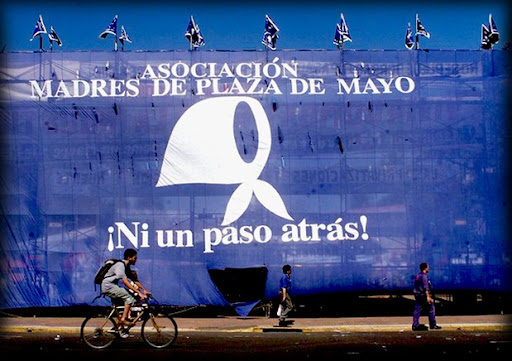
I finally went to see the Madres de la Plaza (before they left this time!) and it was an amazing experience. I originally had written questions to ask them, but it turned out that talking to and trying to understand them was the easiest way to go. One Madre said she had been marching for 33 years. Can you imagine that, 33 years?? What have you done at least once a week for 33 years? (For those my age, we have to tag on an extra 10 years to try to understand even that!) Their courage is amazing to me, and one Madre in particular told me there was still much hurt and sadness in those who had their children disappeared. I suppose the pain of losing a child is hard enough, but to know that it happened to thousands, and that they were probably tortured for no good reason, and then your objections were suppressed, only to never have a proper saying goodbye ceremony, is just tragic. I bought a t-shirt and a book of poems written by those who had been tortured but escaped. It's definitely going to gauge my hold on Spanish! The best part was probably marching with them. There are two groups of Madres now: the ones that simply want to remember and raise awareness about the disappeared, and those who fight for political reform. Currently, they are fighting for agrarian reform (which is basically trying to re-distribute land among the poor). People come to see them every Thursday so they often join in with the march too. Surprisingly enough, the Madre told me she likes Cristina Kirshner, which is rather shocking considering just the other day she compared the "loss of soccer goals" (back story: Argentine TV stations couldn't come to an agreement on airing futbol matches, which is of course a huge deal, but then La Presidenta decided to use $600 million dollars worth of taxpayers' money to show them anyway) and "the disappeared." The fact that she compared soccer and the disappeared is appalling, considering she lived through that time period, and um, she's the president of Argentina!

Anyway, a few friends and I also went to MALBA (Museo de Arte Latinoamericano de Buenos Aires) and it was a great art museum. They hold a lot of modern art, but it was actually the kind that makes you think, unlike the black paintings at Knox that are supposed to make you realize there was once a masterpiece underneath, but you can't, because you never saw them in the first place. They had a few Frido Kalho paintings as well as some of Andy Worhol's works. There was this crazy bench that sort of "melted" on its left side to become vine-like and that crawled up through the walls to the second floor! It was really neat.

After one of my classes last week, I decided to do some exploring and found this indoor mall. Well, right at the end of it, there was an anime shop and as I stepped into it, I told myself not to get too excited. But then I couldn't control myself as they had TONS of Sailor Moon stuff, plus nearly all of the mangas I've read! I picked up Card Captor Sakura, Chobits, Revolutionary Girl Utena, Rurouni Kenshin, Tsubasa, and even Paradise Kiss buttons! And I bought some Sailor Moon mugs too. ^_^ I was in heaven (or Summerland if you're Wiccan, or the equivalent)!

Yesterday, a few ISA friends and Nea (from Knox!) went to an Irish Pub. It was really good getting to catch up with someone who totally understood my world; talking about drama (which you can't have Knox without!), classes, Senate, sororities, etc. Plus, the whole menu was in English (to be authentic) and they had some funny drink names, like Orgasm, Blowjob, and even Shit on the Grass! I had an Irish Flag and a Soho. :)

Tonight was definitely one of the funnest times I've had while in Buenos Aires. The Universidad de Belgrano hosted an International Night where all of the foreign students came together to represent their countries. Mostly, this meant hosting a stand where you had a few foods and lots of alcohol. (America was represented by PB&J, apple pies, jello shots and even a beer bong!) The Germans had meatballs, the French had bread and cheese, etc. But really, they ALL had alcohol. Even Japan was pouring sake in addition to making onigiri. Afterward, they had a dance party where they played international music, and 2 of my friends performed tango, and 2 other friends performed swing. They were awesome and I thought they represented the US well! There were also some Americans that performed line dancing, and I was actually impressed. It was really fun.

Other than that, I've mostly been keeping busy with classes and hanging out (usually at cafes) with my friends. Next I shall conclude with my "thoughts" section. :)

My friend Stella and I were talking about what it means to carry your country's baggage. (She has a particularly wearisome burden because she is from Germany.) Like it or not, we all carry that baggage. As Americans, we have hefty weights on our shoulders. Not only are we accountable for the genocide of thousands of Native Americans, but we are also guilty of creating strife in places we had no right to (this includes Algiers, Vietnam, the Koreas, Japan, Cuba, Puerto Rico, the Philippines, Argentina, Chile, Uruguay, Nicaragua, and probably many more places that I'm not personally aware of). We've colonized islands (one of which we still own), created military dictatorships, contributed to low-wage factories across the world, been a prime component of pollution and the destruction of nature, eliminated political systems that were not favorable to us, among many other travesties. In the US, I often find myself railing against our country (and myself in essence) because of these atrocities. I suppose, in a way, that it lets me distance myself from it, and then protect myself by saying, hey, look, I'm not a, b, and c. But does that really fix things?

The best way, in my opinion, to "alleviate" feelings of shame or guilt over these incidents is to do something about it. (Whether you "think" you contribute to our historical racism, or to Native American poverty, or other systems of oppression is really irrelevant; it has nothing to do with your ancestors either. YOU NOW benefit from the land our founding fathers took, from the religious discrimination they embedded into their idea of government, etc.) I for one have been active in the feminist and Pagan movements for many years now, and it's helped me to come to grips with the fact that my country has been dominated by patriarchy and patriarchal religion for centuries, but I have also realized that I can also raise awareness to change that. I COULD be doing more, and I've been openly criticized for not including racial minorities in my clubs, but I think by me just being a Socialist feminist Pagan environmentalist, I'm contributing a lot more than most people who just go about their daily lives without thinking about anyone else.

And what about the good things that the US has provided? It's often easy to lose track of them while you're a jaded college student rebelling against the "system." Even if it was at the expense of the rest of the world, we've developed the fields of technology and medicine like no other. Without both of those things, I might not be alive to write this, and I definitely wouldn't have a computer to write it on! In addition, we have in many ways paved the road for feminist and gay rights movements and for socially-elected, Constitution-based governments. We've contributed billions of dollars in foreign aid and even perhaps had one of the first and leading movements in environmentalism. In terms of the arts, we've contributed to the fields of dance, literature, music, etc. We boast some of the best athletes in the world. Even though there is a radical right-wing movement trying to sabotage women's right to choose (even through death, as it were!), we have firmly never looked back since Roe vs. Wade. The US might not be perfect, and there may be some who spoil it for the rest of us, but at least among my friends, I've very proud to call myself an American in their presence, and in the world's.

That's all for now, have a great day!

Tuesday, August 18, 2009

Hablamos Castellano, no Español

Buenos noches,

I am happy to announce that I am almost over my cold and my feet are almost completely healed. A great improvement right? :)

Well, let's see, what did I do this week... I think my favorite thing was going to the Buenos Aires Jardin Japones (Japanese Garden).

As you know, I've seen plenty of authentic Japanese gardens, but I thought they did pretty well considering it was right within the city. Apparently their koi are directly imported from Japan. Sometimes I really wish I had gotten to study abroad in Japan, but that would have included changing some of my life goals; however, even in the end, I formally studied their history from "beginning" to "end," and I'm proud to say I know a little Japanese! It's such a beautiful place, but the truth is that I will have spent less in Argentina during four months' time than I spent in Japan in 16 days. I'm still grateful that I got to go there at all, and of course, my ultimate dream would have been to study abroad in the British Isles, which I have been actively trying to get to since high school. Alas, because of time and money, this wasn't the opportunity to do so. However, I know I'll have enough motivation to get there in the future! If my studies really do center around that place, it will be inevitable right? :) Anyway, back to the Japanese Garden: I really wish there had been more Shinto statues, but it was nice to be around nature. They had a nice Japanese restaurant, and that was the second time in a week I got to eat Japanese! ^_^

Other than that, I mostly go out to cafes with my friends and to the bars on weekends. There's a French-owned bar called Le Bar (how original right?) and they have REALLY GOOD pisco sours. They usually have their lights turned down, a DJ, and a couple of floors where you can sit with just your friends. When we were there last week around 4am, it was absolutely packed, but when we got there at midnight the other night, it was bare!

Now I'm going to commence my list of random facts about Argentina.

1) Argentine guys are really aggressive. Mostly girls know just to ignore them, but knowing my heart, I always feel bad, especially for the ones that try to talk in English! (How can they ALWAYS tell we're American/British? We don't usually look that lost and we try not to speak in English. Is it what we wear? How we walk? Are our features really that light? Who knows.) However, my friends explain to me that it's not really worth the risk trying to get to know a guy you just met on the street, even if he seems really nice.

2) This brings me to a scarier thing. Poverty is rampant here, less so than in other Latin American countries, but it still remains a daily part of life for some. This, of course, leads to desperate measures. Pickpocketing is pretty common, and I know several ISA who have already managed to have their wallets stolen one way or another. In fact, I was told that if someone robs you, even if you are quick enough to notice and call out for help, no one will help you. This is because in the past pickpocketers have set up scenes like this so people will be confused as to what to do, and in the meantime their goods will be stolen. Sounds scary right? I've never seen it happen, but then I mostly frequent busy city streets. It's somewhat ironic because when I ask for directions, people are mostly hesitant to help at first because they think I'm a thief, but it's actually my English that saves me because they know English speakers aren't the ones stealing.

3) Something else that's different is solicitation on public transportation. Many American companies completely ban it, but here it's tolerated and people often get on buses and subways to offer their wares. I've seen everything from pens that can also become highlighters and post stickers, to CDs by obscure artists. Socks and kleenexes are often a favorite, and you'll see those on many curbsides as well. Flower, magazine and jewelry stands are on nearly every street. Of course, there are also people who are simply begging for money. It's sad because sometimes people are maimed or disabled in some way, and sometimes mothers have their entire families with them. Sleeping on the streets is not uncommon.

3) Something else that's common among Argentine people is PDA. Like, major PDA. People make out against buildings, in bars, on buses, in fields, even in the middle of the sidewalk! They're all very touchy-feely with each other, and maybe that's to be expected if everyone already kisses each other on the cheek. This is a really Catholic country like I said, so often young adults will stay in these sort of overnight hostels where they can be together instead of coming home... I just always feel weird because I'm like, this is something that belongs to them, not me. But they're right in my way, and I don't know where to look! Oh, my mini dilemmas.

4) I think I mentioned this briefly before, but dogs are by far the favorite pet here. In fact, people love their dogs so much that they often make other people walk them in the city. And of course, since they have upwards of 8 dogs, they don't happen to notice the *presents* they leave behind. And I can only tell you horror stories as to what happens when it rains or you're not looking down.

5) I think three foods/beverages sum up Argentine cuisine: beef, dulce de leche, and mate.


Argentina is really famous for its choice meats, and they've been importing to Europe since the 1800s. As someone who doesn't particularly care for it, it's just too good to go without here. I especially like chorizo (sausage) sandwiches.


Dulce de leche is sometimes described as tasting like caramel, but it's so much more than that! They have dulce de leche spread which they often put on toast or in their flan, they have flavored coffees, ice creams, alfajores (a type of cookie), cakes, muffins, etc. In fact, I just now learned that the Girl Scouts sell dulce de leche cookies. If I ever see a girl scout, I am totally buying them.


The last thing is mate (maa-te). It's an indigenous drink that colonists took up when they arrived. It's made from the leaves of yerba mate and is naturally caffeinated. You can buy regular tea packets (mate cocido) but often people do the whole works involved with it, which is then described as having a taste between "green tea and coffee, with hints of tobacco and oak." It's quite strong.

6) I mentioned that Argentines had an accent before. Well, it's an "Italian" accent, mainly stemming from the masses of Italians that migrated to the region in the 19th and 20th centuries. They refer to their language as "Castellano," not Español. I must say, it messes a lot of things up. Any word with a "y" or "ll" is subject to the "ja/sha" sound, and so it changes words like ella (she), llamar (to call), llevar (to wear), calle (street), yo (I), llegar (to arrive), lluvia (rain), among many others. So assuming you already know that "ll" means "y" for most Spanish speakers, you have to try to catch words that you somewhat remember and then translate them into a familiar Spanish. It's sometimes difficult.

7) I now understand what it's like to go to a big university. Because it's right in the middle of the metropolis, they can't really have a sprawling campus, but they do have several buildings, the main one being about 20 floors. They have one about 5 blocks away, and another one 30 blocks away. Thankfully, buses are frequent around here! Now I'll be grateful that the most it takes to walk across Knox is 10 minutes...

8) ISA people are awesome. I can obviously only speak for the roughly 20 people I know, but here are some general characteristics that I've found in them. Most of them have lived or at least visited Europe; in general, most students have traveled abroad widely. Many have already studied another language, and some are learning to be trilingual. Many are learning Spanish because they want to help Spanish speakers in America live an easier life. They have grand dreams: many want to go to graduate or law school, be union organizers, social workers, writers, etc. A majority of the program is from either Colorado or California, and I don't know if that was by accident or if that's really a true demographic of US population. :P Many consider themselves liberal (I've found several Socialists), but many also do not adhere to radical philosophy, which is really different from Knox, where if you're a moderate you're considered a tool of the capitalist system. A majority, even if they come from well-off families, still practice conservative spending, and many have worked at least one mundane job to save up for traveling. Some have girlfriends or boyfriends, and none of them see studying abroad as an insurmountable obstacle to their relationships. In conclusion, they're some of the coolest people I've ever met.

I'm going to go back and add pictures to my old posts now, but if you want to see all of them, go here:

http://www.facebook.com/home.php#/album.php?aid=2025114&id=62601939&page=7

Well, I think that's about all I have to tell you for now. See you next time!

Monday, August 10, 2009

Liberal BS

Hola chicos,

I might as well start off with the bad stuff first, right? So, last week was not nearly as trying emotionally for me, but physically I was a wreck! I bought some shoes with my friend Kristina because I had been looking for a black pair of flats. Well, I found some really cheap ones (50 pesos, which is about $15) but that seemed to be of good quality. I walked around with them a lot in the store, and they were a little tight but I just thought they had to be broken in. Well, when I wore them to school a few days later, my feet went through so much pain that I'm still wearing bandaids a week later.

Let me explain: I was running late for school, and the university is about 15 blocks away. By the time I got a block away from my apartment, I started to regard my new shoes as mini torture chambers. My left ankle had started hurting again (it never properly healed a few years ago when I severely strained it rollerskating) so I was wearing my wrap, which in the end made things worse. As I was walking down Cabildo, the pain got worse and worse to the point where I stepped on the backs of the shoes so my heels would stop hurting. Well, for better or worse, this put more strain on my toes. I was walking so slowly that I was sure I was going to be late for class, so I just tried to ignore it and go on. Well, after 10 blocks of this, I literally couldn't walk anymore and I TOOK OFF MY SHOES. Yes, that's freaking disgusting to do on city streets, but I couldn't take it anymore. After class, I realized I had to take a taxi home because my feet had become so sore and swollen. When I finally got to my room, I counted 12 blisters and numerous cuts (some of which are still bleeding today). A blister on my pinky toe was literally the size OF my pinky toe, and one on my other foot had popped and nearly got infected. I basically tried not to walk anywhere for 2 days (when I had class, I had to wear my most comfortable flip-flops, and even then, I wore 5 huge bandaids and cotton pads). To make matters worse, I got a terrible cold the next day that left me more tired and with a runny nose, headache and cough. (I'm still using toilet paper because I don't have Kleexes here...) A few days after that incident, I believe I got food poisoning (I'm still not sure from what) because I had these horrific stomach cramps and was sick for what seemed like forever, but what was only a couple of hours. Thankfully, I've gotten most of these things under control now, but it was definitely a trying week.

Anyway! I did manage to get a new coat on the same shopping exhibition as my shoes, and I really love it. It's gray and shaped like a peacoat; it's also not heavy which is what I need here because it doesn't get that cold (contrary to what everyone says). I also managed to find some books in English (which I was SO grateful for, and I think books of other languages should be more readily in America) and ended up buying "The Forest House" (prequel to Mists of Avalon; I LOVE Marion Zimmer Bradley), "Holy Blood, Holy Grail" (which is sort of the basis for the theories in the "Da Vinci Code") and "How God Poisons Everything." I started the last one and it's really confirmed my belief that I want to write a book about Christian tyranny in America; I've already started gathering evidence about their discrimination against minority faiths like (you guessed it!) Paganism. (And yes, this is what I do in my spare time.) Now that I have homework though, it might be a while before I get back to them.

Something interesting that I've been trying to analyze lately is my sense of superiority. What a weird thing to say, right? I only know I have one because of my trainings as a feminist and as a Pagan. Just the other day an Argentine did something particularly rude (though I can't even remember what it is anymore!), but what I do remember is my reaction. I thought: how dare you do that to me? You owe everything to me (aka as an American). Everything you see around you is because of me. These thoughts were instantaneous so I know it wasn't suddenly like I became a bad person overnight, especially since I'll be the first to tell you that different cultures and societies, as long as they do not hurt others, should be protected at all costs. Where did this sense of ego come from? Do most Americans feel this way subconsciously? I shall let you ponder your own thoughts now...

I forgot to mention that last week ISA got together to go to a dance club where we all learned tango and salsa from instructors. We learned just a few basic routines, but it was really fun (especially when your partner was good). I have yet to go to a club (as fun and comfy as the bars are) where dancing is the norm. I actually only made it to 4am this last weekend, so I'm down an hour from the Argentine goal of at least 7am...

This weekend was the "Dia de Campo," which basically means we learned how to be gauchos (sort of like rustic ranchers). Just kidding mostly, but it was to see life in the countryside. We had this HUGE lunch that seriously was like 6 courses and included every kind of meat you could imagine (including tongue, intestines, etc.) I tried the intestines but promptly spit it out into a napkin. There's only so much you can take. The best part of the day was riding the horses. See, when I was about 12, I rode a horse for my first time, except that it was a horrible experience. My mom and brother had been on one horse, but they turned back because it was unruly. That left me with my crazy horse. I don't know if it wasn't fed or watered or something, but it kept walking into lakes to drink and stomping through the forest where I proceeded to get scraped by every tree known to the area. By the time the instructor, who was really a teenaged replacement for the real instructor at the last moment, found me, he blamed me for making the whole tour late. Of course, I started to cry and he seemed to hate me more then. To top it all off, I fell off my horse at the end. Yeah, a really great experience. Since then, I refused to ride horses, but I decided that today would be the day I'd get over my fear of them. They were very calm and gentle horses and we only traveled a few blocks around the town. When someone else's horse kept going down the wrong paths, mine just pulled over to the side and ate some grass in the meantime, but it did NOT plow through the forest, which made all the difference. I was actually shaking the whole time, but I'm really glad I did it. We finished out the day with te con leche, which has become my favorite drink here.


For those of you who still wish to read on, I will tell you now that the following will be about politics. I won't deny that it might expand your idea of "politics" and make you a more open-minded person, but for those who just don't care, I understand if you don't read on.

So, I think a lot about politics in general, but more so here than even in the US. One of the things that has struck me most is that even though I more than agree with progressives in America, I have learned that they are not always right. For example, many left-wingers in the US see Chavez of Venezuela as a president who refuses to fall into US capitalistic-inspired policies. For a while, I thought they must be right. After all, weren't they right about global warming, and abortion, and gay marriage, and all the other socially liberal ideas that came out of progressive thought? The answer is obviously no. Just because someone is working towards the same end as you doesn't mean they're always doing it through the same means, and that's where political differences lie. In Argentina, many believe that Chavez and Castro and the other communist "presidents" are dictators. Some of my "progressive" friends back home would say that the "system" causes us to view them in this way because of our conservative backwardness. Many conservatives are backwards in America, but that doesn't mean they aren't right about some things. I know it's true in this case because Argentina is widely liberal, and even the socialists still hate the "communist" reigns these dictators run. My outright condemnation of the military coup in Honduras seems to be a little rash now; many Latinos see the former president Zelayo as a dictator; indeed, the military ousted him because he attempted to change the constitution in his favor. What I've learned recently in my readings is that military coups were not always bad.

Let me explain: in Latin America, political office has nearly always meant personal glory for oneself. Whether the first US politicians like George Washington were really rare selfless heroes that just happened to be American is debatable, but the fact remains that a primarily corrupt system only begets more corruption in the future. In Argentina for example, political rivalries often impeded any real change. The dominating party in each election was not seen as the most popular, but in fact the most powerful. Instead of seeking partisan cooperation, presidents awarded family members and political allies high seats of administration. Those of the opposing parties were often persecuted and even executed. It has been argued that the infamous military coup that inspired the Dirty War had waited until society was so out of control that people begged the military to take over and impose order. When Isabel Peron became president when her husband died, she had no idea what to do. Inflation was almost 350%, foreign debt was 50 billion dollars, interest rates were up to 40%, foreign investments had gone down by 50%, and a European ban on beef (one of Argentina's main exports), combined with a failed yearly harvest made life nearly intolerable. Add to this the guerilla (read: left-wing) warfare that had become increasing violent by kidnapping and sometimes executing influential businessmen, politicians and military officers. While I am obviously more sympathetic to the Socialist cause that the guerillas fought for, it has once again confirmed my belief that violence and war do not make change. When the military took over, as it had many times before in Argentina, people probably thought that it would once again be temporary and only long enough to hand the government back to civilians once matters had settled down. Probably no one expected the outright extermination of anyone related to leftists, including students and professors, for no other reason that they were young and educated. None of this justifies the absolute atrocities that the military dictatorship committed, but it gives one a background as to how something so disastrous occurred in Argentina and many, many other Latin American countries.

In conclusion, I am saying that EVERY stance, especially political ones, must be carefully thought through; simply agreeing with what your "party" says makes you as simple-minded and disrespectable as the conservatives who preach only what their backwards families tell them to. This is one of the main reasons that I do not agree with anarchy; not because I don't believe humans are incapable of regulating themselves without a hierarchical system (in fact, I believe that humans naturally choose social institutions, but I would concur that ours has been infested for too long with racism, sexism, classism, and religious discrimination, and new regulation is needed) but that most of the self-righteous US anarchists are simply being radical for the sake of being radical. They blow up buildings because they feel they have no other way to communicate their message; in Latin America, I could see the legitimacy for revolution of this kind. Armored resistance has often been the only to make your needs heard. However, in the US, "political prisoners" are often nothing more than ignorant individuals who think destroying urban structures will help the birds' migratory patterns return to normal; nevermind the pollution that their bombs just created. Nevermind the fact that if war and insurrection are the only ways to utopia, the utopia will be one embedded with violence. No, these are the weapons of the weak and spiteful, weapons that extreme right-wingers and extreme left-wingers seem to employ in their attempts to cry like a child, "Why won't anyone listen to me?" This is just another reason history is so important to present society. Bringing this all the way from Latin American to US beliefs then, I disagree with conservatives who think that bombing Iraq will "civilize" the people, but I also disagree with radicals who believe that bombing their own countries will emphasize the need for unhierarchial and peaceful cooperation. No, I place my political beliefs neatly within Socialism, which has sought, in its many forms, to readjust the power given to straight white Christian males (as Papa Bear O'Reilley put it) and to redistribute it among the widest possible audience. Socialism isn't perfect, and thankfully, like Paganism, it offers a wide net for opinions within one movement. However, for developed urban countries like ours, Socialism seems the best bet of creating a society where people at least have the chance of having the same opportunities as those who have ruled for at least 2,000 years. These are my beliefs, at least for now.

Amor y paz a todos.

Monday, August 3, 2009

One Death is a Tragedy, One Million is a Statistic

Hello again everyone,

I hope this note finds you well. As for me, this last week has been a little hard because I've been missing people back home terribly, but thankfully, with everyone's support, I've been able to get to a place where I'm okay again. I am in a great city after all.

Anyway, let me tell you about my week! On Monday a group of our friends went back to San Telmo, which is a hot spot for tourists. It's like a giant market that takes up 7 blocks or so, and they sell everything from chandeliers to imported jewelry to paintings. In essence, they are things you don't really need. However, I couldn't resist from buying a photo of Las Madres de la Plaza; in this particular one, a mother is holding up a picture of Jorge Lopez, a man who was about to testify against his torturers in the 70's when he disappeared in 2006. Yes, people are still being disappeared. (If you have no idea what I'm talking about, look up La Guerra Suica, or The Dirty War.)


I talked to my host mom and her children about it (they're in their 40's) and they have some stark differences in opinion than me. To me, the madres are heroes because despite the military crackdown that eventually tortured and disappeared over 30,000 people in Argentina alone, they continued to protest, demanding to know where their children were. It's a little complicated to explain, but the main reason that the military allowed this group to continue protesting was because they were the essence of motherhood, and in an effort to destroy communism and left-wing politics, they were trying to illustrate that a liberal society would never allow this to happen. Anyway, the madres are still active, and my host mom dislikes them because she thinks they are getting too involved in politics, and that their newest president is not helpful to their cause because she is not only mad at the former dictatorship, but the world.

In addition, Neli's family contends that the only reason I am interested in the "disappeared" is because I was not part of it. This is probably true; for most Argentines, they just want to put the painful past behind them. Despite the military's attempts (in both Argentine and Chile), left-wing politics such as socialism have gained a strong foothold in these countries in the last decade. One thing you have to understand is that in almost of Latin America, the people are not the evil, the government is the evil. And not in the George-bush-doesn't-support-abortion way, but in a way that has caused extreme turmoil between the right and the left and left thousands starving, jobless and homeless. That, and a number of other factors (including the US's funding of arms, education and media), is why militaries have taken over in many countries. In fact, in Honduras right now, some people are welcoming the military to power. My host mom contends that Zelayo (the ousted president) was a dictator, and even though she lived through what happened in the Dirty War, she does not necessarily think a coup is a bad thing.

Argentines are known for their passion for politics, and right now, the political scene has most Argentines (rural and urban) detesting Cristina Kirshner, the current president. Her husband was president before her, but the way Neli explains it to me, she SAYS that she has liberal policies, but she in fact practices conservative policies. Many people think she will be impeached before the next election, and many compare her to Bush, Chavez and Castro. The fact that there are disappearances during her political reign personally strikes me; a lot of the officers of the Dirty War have either been executed or have left the country by now. That means that there are still people in power who do not want the truth to be spoken, and that's more than a little concerning. Anyway, on an uplifting note, the Argentines seem to like Obama, but don't get me wrong, they deeply despised Bush. But then again, who in the world didn't by the end?

I'm sure I'll talk about the Dirty War again at some point; it's really the main reason I came here. Thankfully, my classes are starting to get into full swing. Here's what I'm taking: Political and Social Change, Comprehensive History of Argentina and Latin America, Argentinean and Latin American Economy, and Argentina: the Making of a Country through its Literature. I've never taken an economics class in college, so I hope I'll stay afloat in that one, but the rest are just what I wanted to study. Thankfully, all of them are in English so I won't have to worry about that part.

On Friday some of us went to Parque Centarrio, which was refreshing because there are sparsely any plants or trees in the actual city, and being in nature is a necessity, at least for me. Did you know that humans actually feel happier (I think it has something to do with endorphins) when they're surrounded by nature? Just saying. Anyway, it's still winter here, and thus cold, so we soon wandered over to the Museo de Ciensias Naturales, where they had a dinosaur exhibit with many of the bones found in Tierra del Fuego (the "end of earth") off the south Argentine coast.

It got me to thinking: how do Christians reconcile their beliefs with history? I'm definitely religious but I contend that we don't know everything, and I don't think we have to either. Both scientists and religious people need to learn that, in my opinion. Anyway, they also displayed fossils from ancient fish (some were like 50 feet long!), ancient armadillos, ancient birds, etc. They also had a frog exhibit, I guess because it's the Year of the Frog. Did you know that?

Anyway, speaking of Christianity, Argentina is statistically 94% Roman Catholic, and it was definitely fun trying to explain Paganism to Neli and her children. Wicca is actually big in Brazil, but for the rest of Latin America, some of which have Christianity as their state religion, it definitely hasn't stood a chance. Well, I tried to say that I believed in ancient Gods and Goddesses, like the ones of Greece. They were then convinced that I wanted to go to a Greek Orthodox Church; they really don't seem to understand that Europe was Pagan for 7,000+ years before Christianity arrived. Then I tried to explain it in terms of Native American beliefs; I said that I believed the Earth was divine, and then they told me about the remaining tribes and their worship of Patchamama, who is an ancient local Goddess. I didn't dare go into Witchcraft; there are enough crazy zealots in the US trying to eradicate Witchcraft, or in the way I'm using it, ancient beliefs. Actually, a Mexican (Catholic) on the trip said that he doesn't think the Inquisition was that bad, and that people should stop making such a big deal out of it. He justified it by saying that it wasn't as bad as the Holocaust. I'm lucky I didn't go crazy right there, but seriously, how many people have to die before it becomes worthy of note? 500,000? Two million? I guess the horrors of the Congo don't matter because there weren't as many people killed as the Holocaust; I guess Japan's massacres of Chinese and other Asian cities doesn't matter; I guess the atrocities of Bosnia don't matter either. It goes without saying that there were many, many less people at the time of the Inquisition than there were in the 20th century, but these people were being killed not because they WERE Witches, or people who practiced ancient beliefs like seasonal festivities, spellwork and herbal medicines, but they were mostly CHRISTIAN WOMEN who were accused of being Witches, or people like me. Just today, I saw that the Vatican, about a decade ago, officially released a statement blaming "Neo-Paganism" for the Holocaust, when in fact most Nazis used Christianity to justify their genocide of the Jews! I'm always between outrage and sadness when I read these things, and it's only my activism that allows me to go on in a world where the dominant religions (Christianity, Judaism, and Islam) would eradicate me if they could. I didn't even bother bringing my religious jewelry to Argentina; I knew they would judge me, and judge me harshly.

I guess I should have warned everyone that if you'd read my blog, you'd be reading about my beliefs too!

Anyway...

Yesterday the ISA group traveled to El Tigre, which is part of the Delta, a 21000 square km waterway that flows into the the Rio de la Plata, and then to the Atlantic Ocean.

We had to travel by boat because part of the city doesn't have roads; they use boats to get everywhere. In fact, the Colective (the name for the buses here), is a boat that gives rides back and forth between the city and Buenos Aires daily. Eventually we made it to the Puerto de Frutos, which is like a little city that sells various things like mate cups, handmade bags and purses, and even dogs! I'm really not sure who would go out that far just to buy a dog, or if people routinely think they need to buy one when they're wandering through the port. Anyway, later on in the day, we stopped by a restaurant where we had reserved tables on the second floor, and we ate snacks and drank Submarinos (a type of hot chocolate, but where you put a bar of chocolate in hot milk and stir). It was really cool because it was on the coast of Buenos Aires, and you could see the city from a distance.

Later on that night we all went out to celebrate the birthday of our friend Jessica. She was turning 21, but here the legal age to drink is 18, and that's really only a formality. The funny thing is Jessica actually went to school with my friend Claire from Knox, and we all bonded separately over feminism! To top it all off, we're all going to in Buenos Aires for the semester. Small world, right? Anyway, we went to a sort of international bar called Sugar, but it took nearly half an hour to get in. It was so sad; they actually had a sign on the front door telling people not to dance. So, mostly, we all sat in our own corner on the second floor and drank. (It was at this point we all had our first shots in Buenos Aires, which were really more like double shots. It was awesome.) Remember how I told you that native Argentines stay at the bars until 7 in the morning? Well, I had been awake since 8 that morning, and I finally had to leave at 5am because I was falling asleep on the chairs. I haven't made it quite yet, but I promise you, I will!

Here's a bit of humor to end the post, as told to me (originally in Spanish) by Neli's son.

What do you call a person who knows two languages?
Bilingual.
What do you call a person who knows three languages?
Trilingual.
What do you call a person who knows four languages?
Quadalingual.
What do you call a person who only knows one language?
American.